Showing posts with label The Holy Land. Show all posts
Showing posts with label The Holy Land. Show all posts
Sunday, May 4, 2014


Wednesday, January 15, 2014
Repost: Yearning (2010)
I honor of Tu b'Shvat, I'm reposting this story I heard from Rav Moshe Weinberger way back when the Orot HaTorah shiur from Rav Kook was just beginning. It's apropos for the occasion, especially because Rav Weinberger mentioned the story in his massive gathering last week in the Holy Land with several hundred folks who are looking for some fire in the cold, cold winter...
Thursday, November 14, 2013
Katonti...
...קָטֹנְתִּי מִכֹּל הַחֲסָדִים, וּמִכָּל-הָאֱמֶת, אֲשֶׁר עָשִׂיתָ, אֶת-עַבְדֶּךָ:
Adapted from Ein AYaH:
The Talmud (Shabbat 32a) counsels the following attitude towards miracles:
"One should never put himself in a dangerous situation and say, 'A miracle will save me.' Perhaps the miracle will not come. And even if a miracle occurs, one's merits are reduced."
The Sages learned that one should not rely on miracles from Jacob. When Jacob returned home after twenty years in Laban's house, he greatly feared meeting his brother Esau. He prayed to God, "I am unworthy of all the kindness and faith that You have shown me" (Gen. 32:11). The Sages explained Jacob's prayer in this way: "I am unworthy due to all the kindness and faith that You have shown me." Your miracles and intervention have detracted from my merits.
We need to examine this concept. What is so wrong with relying on miracles? Does it not show greater faith? And why should miracles come at the expense of one's spiritual accomplishments?
The Function of SkepticismSkepticism is a natural, healthy trait. Miracles can have a positive moral influence, but they also have a downside. Reliance on miracles can lead to a weakened or even warped sense of reality.
At certain times in history, God disrupted natural law in order to increase faith and knowledge. However, this intervention in nature was always limited as much as possible, in order that we should not belittle the importance of personal effort and initiative. This is where skepticism fulfills its purpose. Our natural inclination to doubt the occurrence of miracles helps offset these negative side effects, keeping us within the framework of the naturally-ordered world, which is the greatest good that God continually bestows to us. It is preferable that we do not rely on divine intervention, but rather say, 'Perhaps a miracle will not occur.'
Miracles and NatureUltimately, both miracles and natural events are the work of God. So how do they differ? A miracle occurs when we are unable to succeed through our own efforts. By its very nature, a miracle indicates humanity's limitations, even helplessness. When miracles occur, we are passive, on the receiving end.
Natural events are also the work of God, but they are achieved through our skill, initiative, and effort. When we are active, we spiritually advance ourselves by virtue of our actions. Our zechuyot (merits) are the result of the positive, ethical deeds that we have performed. We should strive for an active life of giving, not a passive one of receiving. Such an engaged, enterprising life better fulfills God's will — the attainment of the highest level of perfection for His creations.
Jacob 'used up' merits when he required God's intervention to protect him from Laban and Esau. He admitted to God, "I am unworthy due to all the kindness and faith that You have shown me." But Jacob later regained spiritual greatness through his active struggle against the mysterious angel. "For you have struggled with angels and men, and have overcome them" (Gen. 32:29).
And here's a rather nice song from Yonatan Razel, inspired by these verses; as you can see, he's taken some liberties with the wording, but it works overall...
Wednesday, November 6, 2013
The Fable of the Goat
From a collection of S. Y. Agnon's short stories and essays, this one just grabbed me. There's a part toward the end that just hit me in the gut; there was an involuntary sucking in of air when I read it...
The tale is told of an old man who groaned from his heart. The doctors were sent for, and they advised him to drink goat's milk. He went out and bought a she-goat and brought her into his home. Not many days passed before the goat disappeared. They went out to search for her but did not find her. She was not in the yard and not in the garden, not on the roof of the house of study and not by the spring, not in the hills and not in the fields. She tarried several days and then returned by herself; and when she returned, her udder was full of a great deal of milk, the taste of which was as the taste of Eden.
Not just once, but many times she disappeared from the house. They would go out in search of her and would not find her until she returned by herself with her udder full of milk that was sweeter than honey and whose taste was the taste of Eden.
One time the old man said to his son, "My son, I desire to know where she goes and whence she brings this milk which is sweet to my palate and a balm to all my bones."His son said to him, "Father, I have a plan."He said to him, "What is it?" The son got up and brought a length of cord. He tied it to the goat's tail.His father said to him, "What are you doing, my son?" He said to him, "I am tying a cord to the goat's tail, so that when I feel a pull on it, I will know that she has decided to leave, and I can catch the end of the cord and follow her on her way." The old man nodded his head and said to him, "My son, if your heart is wise, my heart too will rejoice."
The youth tied the cord to the goat's tail and minded it carefully. When the goat set off, he held the cord in his hand and did not let it slacken until the goat was well on her way and he was following her. He was dragged along behind her until he came to a cave. The goat went into the cave, and the youth followed her, holding the cord. They walked thus for an hour or two, and maybe even a day or two. The goat wagged her tail and bleated, and the cave came to an end.
When they emerged from the cave, the youth saw lofty mountains, and hills full of the choicest fruit, and a fountain of living waters that flowed down from the mountains; and the wind wafted all manner of perfumes. The goat climbed up a tree by clutching at the ribbed leaves. Carob fruits full of honey dropped from the tree, and she ate of the carobs and drank of the garden's fountain.The youth stood and called to the wayfarers: "I adjure you, good people, tell me where I am, and what is the name of this place?" They answered him, "You are in the Land of Israel, and you are close by Safed."
The youth lifted up his eyes to the heavens and said, "Blessed by the Omnipresent, blessed be He who has brought me to the Land of Israel." He kissed the soil and sat down under the tree. He said, "Until the day breathe and the shadows flee away, I shall sit on the hill under this tree. Then I shall go home and bring my father and mother to the Land of Israel."
As he was sitting and feasting his eyes on the holiness of the Land of Israel, he heard a voice proclaiming: "Come, let us go out to greet the Sabbath Queen." And he saw men like angels, wrapped in white shawls, with boughs of myrtle in their hands, and all the houses were lit with a great many candles. He perceived that the eve of Sabbath would arrive with the darkening, and that he would not be able to return.
He uprooted a reed and dipped it in gallnuts, from which the ink for the writing of the Torah scrolls is made. He took a piece of paper and wrote a letter to his father: "From the ends of the earth, I lift up my voice in song to tell you that I have come in peace to the Land of Israel. Here I sit, close by Safed, the holy city, and I imbibe its sanctity. Do not inquire how I arrived here but hold on to this cord which is tied to the goat's tail and follow the footsteps of the goat; then your journey will be secure, and you will enter the Land of Israel."
The youth rolled up the note and placed it in the goat's ear. He said to himself: When she arrives at Father's house, Father will pat her on the head, and she will flick her ears. The note will fall out, Father will pick it up and read what is written on it. Then he will take up the cord and follow the goat to the Land of Israel.
The goat returned to the old man, but she did not flick her ears, and the note did not fall. When the old man saw that the goat had returned without his son, he clapped his hands to his head and began to cry and weep and wail, "My son, my son, where are you? My son, would that I might die in your stead, my son, my son!" So he went, weeping and mourning over his son, for he said, "An evil beast has devoured him, my son is assuredly rent in pieces!"
And whenever he saw the goat, he would say, "I will go down to my grave in mourning for my son." The old man's mind would not be at peace until he sent for the butcher to slaughter the goat. The butcher came and slaughtered the goat.
As they were skinning her, the note fell out of her ear.
The old man picked up the note and said, "My son's handwriting!" When he had read all that his son had written, he clapped his hands to his head and cried, "Vay! Vay! Woe to the man who robs himself of his own good fortune, and woe to the man who requites good with evil!"
He mourned over the goat many days and refused to be comforted, saying, "Woe to me, for I could have gone up to the Land of Israel in one bound, and now I must suffer out my days in this exile!"
Since that time the mouth of the cave has been hidden from the eye,and there is no longer a short way. And that youth, if he has not died, shall bear fruit in his old age, full of sap and richness, calm and peaceful in the Land of the Living.
Tuesday, September 24, 2013
"Adam rotzeh kav shelo..."
The following is a short piece from Rabbi Ron Yitzchak Eisenman, of Ahavas Israel in Passaic, NJ. The piece also appeared in the Succos edition of Mishpacha Magazine, and I found it very moving. I think what resonated so deeply was the effort and the pleasure the people involved took in putting something meaningful together, something that we don't very often have these days with the ubiquity of "convenient" methods to perform mitzvot.
We have the pleasure of being in the Holy Land for the chag, and due to our arrival shortly before the beginning of the chag, I had to rely on someone else to purchase my dalid minim (Four Species). The fact that I wasn't personally involved in the process of buying and setting it up rubbed me the wrong way, in terms of quality as well; I simply wasn't happy with the way my lulav was prepared. But I think that it stems more from the fact that I had virtually no part in it more than anything else...
We have the pleasure of being in the Holy Land for the chag, and due to our arrival shortly before the beginning of the chag, I had to rely on someone else to purchase my dalid minim (Four Species). The fact that I wasn't personally involved in the process of buying and setting it up rubbed me the wrong way, in terms of quality as well; I simply wasn't happy with the way my lulav was prepared. But I think that it stems more from the fact that I had virtually no part in it more than anything else...
A Succah Grows in Brooklyn
It was 1971 the young man was looking forward to Succos. Although he lived in Brooklyn and attended yeshiva, nevertheless his family was not unique in not having a Succah of their own.
Although nowadays one walks the streets of Borough Park and Flatbush and there is hardly a house without a Succah, in the early 1970s there were many Frum Jews who did not ‘yet’ have their own Succah. Many people made due with the Shul’s Succah or shared with a neighbor and did not have their own private Succah. The young man and his family were one of those families.
Our friend was disappointed that his family had no Succah to call their own and he asked his parents if this year they could have their own Succah. After discussing the matter and looking into various options, his parents told him that they could not afford a Succah this year; maybe next year, but not this year.
Yom Kippur had passed and so had the Shabbos between Yom Kippur and Succos. Sunday night would be Succos and once again the family would eat a quick meal in the Shul Succah and come home to go to sleep. His parents could feel his disappointment however; financially they were strapped and could not afford a Succah. As he sat at home silently eating his Melave Malka with less than 24 hours before Yom Tov he was sad.
When his parents excitedly called before he headed off to sleep that Motzei Shabbos, he was not sure if he was already dreaming. “We are at friends and they just told us that they have the frame of their old Succah in their garage. They are away for Yom Tov and they said you could have it.”
The young man could hardly sleep that night.
Immediately after Shacharis he jumped in his parent’s 63 Oldsmobile Cutlass and headed to his parent’s friend’s garage to retrieve ‘two by fours’ in various lengths.
When he came home he realized that all he had was ‘at best’ the potential for a wall-less frame of a Succah and there was less than 10 hours to go to Yom Tov.
However, the dream was too wonderful to give up on so he took his two ‘left-hands’ and began to clumsily bang a nail here and cut a piece of wood there as he Davened to Hashem for his Succah.
At about 11 in the morning as the young man was ‘hocking away’ his Israeli neighbor Yossi who was ‘not-yet-frum’ (he is actually very frum now and is a Rebbe living in Israel after learning in Kollel for many years) walked by and said, “What are you doing?” “I am building a Succah”, our friend replied. Yossi quickly ran to his home and returned in a flash with a proper hammer and a working saw and announced, “At the rate you are going, you will finish by Pesach. Move over and let me give you a hand.”
For the first time in the history of East 82 Street in Canarsie, Brooklyn, the sounds of Succah building was heard in the air.
Lenny Waldman a ‘never-to-be-frum-Jew’ walked by and said, “What you guys doing?” Once again our friend said, “We are building a Succah.” Lenny looked at them and asked, “What is going to be the roof for your little Succah?”
Our friend realized that in his rush to build the Succah he had forgotten about the most important part, “The Schach!”
The young man looked at Lenny and said, “I don’t know, however, we will think of something. We need something which grows which won’t wither during the eight day holiday.”
Lenny, who was a quiet man, said nothing but disappeared into his house. A few moments later he re-appeared complete with ladder and a large pair of electric shears and methodically he began to cut large swathes from the huge evergreen tree which grew in his front yard. “I always wondered why I let it grow so large”, Lenny said aloud as he continued to ‘buzz’ the tree.
Henry Gordon who lived with his 92 year old mother and drove a cab in the city was parking his cab as he heard Lenny cutting his large evergreen tree. “Lenny, what you doing?” he inquired. Lenny said, “The young guy next door is building a Succah and I am helping him out with the covering.”
“Well, the frame looks okay, however, what are they using for walls?” Mr. Gordon asked. “Beats me” said Lenny; “Ask the kid.”
Henry came over and inquired, “What about the walls? Where are they?” Our friend simply answered, “I don’t know; however, I guess I’ll grab some old sheets and tack them to the frame.” Henry looked at ‘Yossi the Israeli builder’; he glanced at ‘Lenny the tree-trimmer’ and said “I have an idea, I’ll be back soon.”
Ten minutes later he reappeared pushing a wheel-barrel full of doors. “When I drive around the city, anytime I see an old door, I stop the cab and throw it in the trunk. I don’t know why, however, I have been doing it for years. Let me ‘donate’ them as walls for your Succah”.
Slowly Yossi, Henry and our friend began to attach the door to the frame and as the sun began its westward descent, the Succah looked more like a reality than a dream.
Murray Cohen who would always refer to himself as a ‘non-practicing Kohen’ was the last neighbor to meander across the street. “Hey, what you all doing?” he asked as he answered his own question by saying, “Looks like you are building a Succah. Wow, I have never seen one of those around Canarsie.”
He looked at the mishmash of doors turned into walls; of evergreen branches becoming Schach and of Yossi the secular Israel becoming a Succah builder.
“You know what, wait one minute I have something for you.” Murray ran across the street to his house and returned with a large sheet of green felt. “You know I fix pool tables for a living and when they redo the old tables they give me the old green felt. I have no use for it however; it seems that if we staple the felt to the doors it will give the Succah a real homey feeling.” Soon Murray was stapling felt across the doors to create green walls as Lenny was putting the finishing touches on the evergreen Schach and as Yossi the builder hammered in the final nail.
It was 6 P.M. candle lighting was just minutes away; our friend looked at Lenny, Yossi, Henry and Murray and then set his eyes on his Succah as he realized that sometimes dreams do come true.
That night as our friend entered his Succah and was about to make Kiddush there was a knock on the Succah door. In walked Lenny who said, “Hey looks pretty cozy in here.” Soon Henry appeared explaining that he was simply admiring his handiwork, followed by Yossi and Murray who both said, “Let’s see how this Succah actually ‘works’.”
As our friend recited Kiddush he felt no need to ‘invite’ the Ushpizin. As he glanced at his Succah and saw the proud faces of Yossi, Lenny, Murray and Henry he had no doubt that all of the Ushpizin were already proudly standing right next to him in his ‘dream’ Succah.
Many years have passed since the Succos of 1971. Our friend now has a large and roomy Succah connected to his kitchen with panels coordinated by number and layers of ‘Glatt-kosher’ Schach.
His Succah is full of family and friends and has florescent light fixtures as opposed to the one hanging incandescent bulb of his Succah of 1971.
However, every year as I recite Kiddush in my Succah surrounded by family and friends I still pine for my Succah of 1971 which although was ad-hoc and small and flimsy was no doubt the most beautiful and precious Succah I was ever privileged to enter.
Friday, August 9, 2013
Rebbe Shlomo: Rav Kook on Ishbitz and Breslov Chassidus
Today is Rav Kook's yahrtzeit, the third of Elul. Readers of the blog will remember that my third son's bris was on this day as well!
Z'chuso yagein aleinu!
Monday, July 8, 2013
Recognizing the stakes
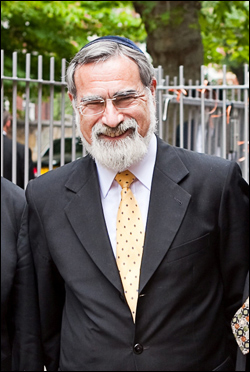
(I'm still not quite convinced that that was indeed the point Rabbi Sacks was trying to make; for starters, the Siyum was anything but monolithic - while under the auspices of the Agudah, the Siyum that I attended had more than a fair share of all types of Jews from all walks of life, many of whom do not subscribe to the Agudist party line, to say the least. Rav Hershel Schachter shlita - who is decidedly not an "Agudist" - was seated in a very nice place on the dais; moreover, a very warm and welcoming forum was provided for the former Ashkenazic Chief Rabbi of Israel, Rav Yisrael Meir Lau, shlita. To present it as an example of anything other than a swell in limmud haTorah is inaccurate.
I think the quote as read was an unfortunately [and uncharacteristic] awkward expression meant to illustrate the growth in numbers of people looking to connect to Torah vis-a-vis those who are growing away from it.
Perhaps a better illustration of the 'massing of extremes' would be the 'other' mega-event that took place a few months prior to the Siyum at neighboring Citi Field, but I digress...)
Still, this is not a new position for Rabbi Sacks. A cursory review of his works - both literary and his efforts as Chief Rabbi - will attest to this principle that he has advocated for years: engaging the world, opening up the universal beauty and wisdom that is Judaism to the other nations of the world, and seeking to elevate us all by celebrating what we have in common rather than focusing on what sets us apart.
This is not necessarily a bad thing, but it does (perhaps ironically in light of the previous statement) highlight a significant difference between different groups of Torah true Jews concerning where our emphases should be.
This is not a novel idea, either. Some might say that this was the Judaism that Rav Shamshon Raphael Hirsch OBM championed, and they might be correct; there is no question that Rav Hirsch's Torah Im Derech Eretz is an attempt at synthesis that worked rather well for German Jewry (But the question remains whether this is an ideal - ab initio - or a response to the needs of the time in the face of existential danger to an entire community.).

Regardless, Rabbi Sack is not suggesting anything radical or innovative. It is one legitimate approach to our mission on this world, an attempt to sanctify and glorify the name of God. But it is one approach among many, including that of the Agudah and others, all of which are valid to a degree, with certain qualifiers.
And both of the two approaches being presented in this false dichotomy are fraught with realistic dangers and concerns.
When Rav Kook spoke at the inauguration of Hebrew University in 1925**, he touched upon this very theme. His speech begins by quoting from Isaiah:
 Citing this second ideal as the hopeful prospect of what the Hebrew University can accomplish, Rav Kook then continues with an exhortation:
v'Ani haKatan - I have so much more to say, as I try to figure this out myself. As I said earlier, there are many approaches, and all have their drawbacks; I certainly don't subscribe to the idea that we should circle the wagons. I don't want to focus on negativity here, but there's a lot of room for improvement for all of us. That should be something to consider during these times...
* See Rakefett-Rothkoff, The Rav vol 2. pages 229-31
** All quotations are courtesy of Leiman, S.Z. Rabbi Abraham Isaac Ha-Kohen Kook: Invocation at the Inauguration of the Hebrew University TRADITION 29:1 (1994); retrieved from here
"Lift up your eyes and look about; they have all gathered and come to you. Your sons shall be brought from afar, your daughters like babes on shoulders. As you behold, you will glow. Your heart will fear and rejoice - for the wealth of the sea shall pass on to you; the riches of the nations shall come to you." (60:4-5)After explaining how the first verse is being borne out with the nascent developments of the Holy Land, Rav Kook turns to the second verse:
But why "fear"? Why did the prophet preface the phrase "your heart will rejoice" with the notion of fear? When, however, we look back in retrospect at past generations, and at the spiritual and intellectual movements that have influenced us, we readily understand that the notion of fear, in conjunction with rejoicing, is appropriate.
Two tendencies characterize Jewish spirituality. One tendency is internal and sacred; it serves to deepen the spirit and to strengthen the light of Torah within. Such has been the purpose of all Torah institutions from earliest times, especially the fortresses of Israel's soul - the yeshivot. This includes all the yeshivot that ever existed, presently exist, and will exist in order to glorify Torah in its fullest sense.This spiritual tendency is fully confident and assured...
The second tendency characterizing Jewish spirituality served not only to deepen the sacredness of Torah within, but also as a means for the propagation and absorption of ideas. It served to propagate Jewish ideas and values from the private domain of Judaism into the public arena of the universe at large...It also served to absorb the general knowledge derived by the collective effort of all of humanity, by adapting the good and useful aspects of general knowledge to our storehouse of a purified way of living.

Here, dear friends, there is room for fear. From earliest times, we have experienced the transfer of the most sublime and holy concepts from the Jewish domain to the general arena. An example of propagation was the translation of the Torah into Greek...There were also instances of absorption. Various cultural influences, such as Greek culture and other foreign cultures that Jews confronted throughout their history penetrated into our inner being...
We gained in some areas and lost in others in our confrontation with foreign cultures. This much is clear: Regarding those circles that welcomed absorption and propagation joyously, with unmitigated optimism and with no trepidation, very few of their descendants remain with us today...[T]he vast majority of them have assimilated among the nations; they found themselves caught up in the waves of the "wealth of the sea"...
Only from those who resided securely in our innermost fortresses, in the tents of Torah, enmeshed in the sanctity of the law, did emerge the truly creative Jews...Among these were many who propagated and absorbed. They exported and imported ideas and values on the spiritual highway that mediates between Israel and the nations. Their attitude, however, toward this undertaking was never one of rejoicing only. Fear accompanied their joy as they confronted the vision of the "wealth of the sea" belonging to the "richest of the nations."Rabbi Sacks' vision is an inspiring, hopeful one, but it needs to be approached with the appropriate wariness and a firm commitment to Torah. While I don't doubt that Rabbi Sacks meets that criteria, we have to take painstaking steps to ensure that when we engage the world around us, it is indeed a confrontation - it may be civil, but we should never let our guard down.
v'Ani haKatan - I have so much more to say, as I try to figure this out myself. As I said earlier, there are many approaches, and all have their drawbacks; I certainly don't subscribe to the idea that we should circle the wagons. I don't want to focus on negativity here, but there's a lot of room for improvement for all of us. That should be something to consider during these times...
* See Rakefett-Rothkoff, The Rav vol 2. pages 229-31
** All quotations are courtesy of Leiman, S.Z. Rabbi Abraham Isaac Ha-Kohen Kook: Invocation at the Inauguration of the Hebrew University TRADITION 29:1 (1994); retrieved from here
Monday, April 15, 2013
Last(-ish) chance!
At the time of posting, the Argan of the Negev campaign has just a little more than 24 hours to go, and can still use a lot of help. Although our intrepid pioneers assure us that they're a lot closer to the goal than their Indiegogo page indicates, there is much to be done and I'm sure that every little bit makes a big difference.
I was happy to see the Rappeports highlighted in a recent issue of Mishpacha magazine, and I really hope that this project works out well - for them, and for us in partaking in some way in the cultivation of the Holy Land.
I just saw that a popular TV show that had a cult following before its cancellation raised 5 million dollars during its campaign to raise funds for a movie budget on Kickstarter - its intended goal was a measly $2 million, which was contributed in an insanely short time (the first 15 hours or so). While we may not be as numerous as the fans of that silly show, we can dig deep into our pockets for a worthy cause.
Again, to donate visit their page on Indiegogo; for more info on the Argan tree, the Negev, and the Rappeports, visit their site here.
Tizku l'mitzvot!
Monday, March 11, 2013
Greening the Negev
"It is said that one should go after HaShem. Is it possible for flesh and blood to go after HaShem? It is also said that one should cleave to HaShem. Is it possible for flesh and blood to cleave to HaShem? Rather one should go in His ways, and cleave to His character traits. And just as HaShem, at the beginning of creation, first planted and tended to the Garden of Eden, so too should Am Yisrael upon entering the Land, as it is written: 'You should come to the Land and plant.'" (VaYikra Rabba, 25:3)A friendly message was waiting in my inbox this past Motzei Shabbos Kodesh, with a link to this startup:
I have a soft spot for anything that has to do with the Holy Land - doubly so for an endeavor that is trying to settle the land, create economic growth, and help fellow Jews make ends meet.
Mitzpe Ramon used to be a boom town, as it was situated on the southern route toward Eilat. However, with the development of infrastructure including the major highways that bypassed this settlement, the area floundered.
The Argan tree yields a valuable resource that these folks are hoping to "capitalize" on; not only will this stimulate the local economy, it will also benefit the ecology as well.
If you can, please donate and lend a hand towards getting this program off (and into) the ground.
Tizku l'mitzvot!
Tuesday, March 5, 2013
I felt like sharing some clips of the Tolna Rebbe shlita, a real tzaddik and source of inspiration for many, including myself. After hearing a shiur that Reb Ally posted on YUTorah, I was brought back to my one and only matzah baking experience, last year with the Rebbe himself on erev Pesach.
That experience was wonderful, unlike anything I'd ever had.
The most memorable part was the joyous singing of Hallel, over and over again as the chassidim rolled the unleavened dough into matzot, which the Rebbe then perforated with a special roller just before it was placed into the oven.
I can still feel the warmth of his hand from when he stroked my cheek when we went to greet him beforehand...
That experience was wonderful, unlike anything I'd ever had.
The most memorable part was the joyous singing of Hallel, over and over again as the chassidim rolled the unleavened dough into matzot, which the Rebbe then perforated with a special roller just before it was placed into the oven.
I can still feel the warmth of his hand from when he stroked my cheek when we went to greet him beforehand...
Tuesday, February 26, 2013
Thursday, January 24, 2013
Now with English...
I posted a slightly different video a few months back, having found it over at Dixie Yid's blog.
This go-around has English subtitles for those who struggle with the Hebrew.
Kudos to my brother for sending this to me...
Tuesday, December 11, 2012
The Imperative of Chanuka
Words of encouragement and exhortation from the Lubavitcher Rebbe OBM...
And a contemporary tzaddik, the Tolna Rebbe of Jerusalem, at the first night's lighting this year:
Anyone with a yiddish translation would be welcomed...
And a contemporary tzaddik, the Tolna Rebbe of Jerusalem, at the first night's lighting this year:
Anyone with a yiddish translation would be welcomed...
Wednesday, November 21, 2012
Just Cause
I've been mulling over a new thought I saw this week in Ohr Gedalyahu, who quotes the Medrash Tanchuma that Yaakov's departure from the Holy Land was an aspect of exile (Yaakov's "taking" the birthright effectively severed Esav's spiritual life. One who cuts a life short - albeit unintentionally - must go into exile).
Within the context of this idea, Rav Schorr refers to the fact that the exile was essentially a decree from our forefather Avraham; at the bris bein habesarim it was established that Avraham's decendents would be exiles, wandering from country to country. Nevertheless, although a decree may be set for generations, in every generation there must be some sort of pretense to "warrant" the decree, no matter how tenuous. Case in point, the birthright in last week's parsha.
I'm not sure I understand this correctly. This idea of needing a "siba" as Rav Schorr puts it is intriguing; it seems like one of those many instances where God plays by "the rules" of our finite human intellect; we (humans) look for causality, and it would seem "unjust" for Him to visit upon one's progeny hardship apropos of nothing, so He finds something to hang it on.
But why? This cannot be the only reason (if it applies at all), because what happened to "For My thoughts are not your thoughts, nor are your ways My way..."? The Holy One answers to no one, nor can anyone really question him. Is there a deeper insight in this concept of finding a pretense?
Any thoughts are appreciated.
Within the context of this idea, Rav Schorr refers to the fact that the exile was essentially a decree from our forefather Avraham; at the bris bein habesarim it was established that Avraham's decendents would be exiles, wandering from country to country. Nevertheless, although a decree may be set for generations, in every generation there must be some sort of pretense to "warrant" the decree, no matter how tenuous. Case in point, the birthright in last week's parsha.
I'm not sure I understand this correctly. This idea of needing a "siba" as Rav Schorr puts it is intriguing; it seems like one of those many instances where God plays by "the rules" of our finite human intellect; we (humans) look for causality, and it would seem "unjust" for Him to visit upon one's progeny hardship apropos of nothing, so He finds something to hang it on.
But why? This cannot be the only reason (if it applies at all), because what happened to "For My thoughts are not your thoughts, nor are your ways My way..."? The Holy One answers to no one, nor can anyone really question him. Is there a deeper insight in this concept of finding a pretense?
Any thoughts are appreciated.
Thursday, November 1, 2012
Rav Elazar Menachem Man Shach OBM
I've been saving this for today, the 16th of Mar Cheshvan, Rav Elazar Menachem Man Shach's yahrtzeit. I read it this year in Song of Teshuvah by Rav Moshe Weinberger:
But one comment that his son Dr. Ephraim Shach made about finally realizing that Rav Shach's entire worldview was through the prism of Torah sheds some light:
Perhaps the answer is "yes" - certainly for us down here dealing with all of our nisyonot. Perhaps one can say that this might have been Rav Shach's nisayon. Perhaps, but I don't think we can say one way or another, and we should look at his life as an example of what our lives could look like if we strove to have that same level of dedication. At the end of the day, the stories of his "meshugass" (I shudder at phrasing it that way, but it's for the sake of making a point) in contrast to our own craziness...? I know which one I would prefer to have.
There is a lot more to say about this topic and the general problem I see with our (and I include myself in this) hubris in assuming that we're on any similar level with certain individuals. That we have the gall to say "I disagree with Rav _______" on a given subject that we maybe have some familiarity with, and certainly not the specific details or cheshbonot involved in a specific discussion is a sign of real unprecedented chutzpah.
I believe that one source of this problem is the proliferation of media that enables everybody to espouse hisunsolicited opinion on any topic under the sun*. This use to happen in the mikvah and at kiddush clubs and around the water cooler on a regular basis; it's not a new phenomenon that one fellow who has the right amount of charisma, bluster, and confidence can hold forth on any subject to his rapt audience, of course. But now it has become global and more vocal, and these people find reinforcement among like-minded individuals, so it becomes a self-perpetuating problem to a dangerously larger degree.
Sorry about the rant, but a comment from last year's post set this off.
* yes, I caught the irony. It goes without saying that I am guilty as charged, I think.
There was a Chassidic Jew in Bnei Brak who had lost everything during WWII and was spiritually broken. One day he came to pour his heart out to Rav Menachem Man Shach, who was not at all Chassidic, but who understood full well the pain of a broken Chassidic heart.This Jew told what had happened to him and said, “I cannot even pray anymore.”Rav Shach said, “What Chassidic group do you belong to?”The man told him, and Rav Shach began to hum a niggun, a tune, from that group. The Chassid closed his eyes and hummed the niggun together with Rav Shach, until he started to cry.
Rav Shach said, “For a Chassid, it’s not enough to sing a niggun. We have to dance.” So Rav Shach stood up and danced with this Jew for a long time.Afterwards this Jew could pray again. Rav Shach did not give him a theological explanation about where God was during the Holocaust.
He knew that this niggun was still inside that Jew, hidden underneath the pile of ashes from Auschwitz.A lot of people presume to know the mind of this gadol, not to mention that they seek to question his status of a gadol to begin with. I cannot honestly say that I understand him, and there are many things that I do not understand about his positions on many issues.
But one comment that his son Dr. Ephraim Shach made about finally realizing that Rav Shach's entire worldview was through the prism of Torah sheds some light:
"חזרתי לדבר איתו אחרי שנה, אבל להבין את הצד שלו הבנתי רק ב-71', כשאבא שכב בבית החולים תל-השומר. גילו אצלו סרטן והוא עמד בפני ניתוח. פתאום הוא אמר לי שהוא רוצה שאקח אותו חזרה הביתה, כי אין לו בבית החולים אפשרות ללמוד כמו בבית. אז הבנתי שאין מה לעשות – לימוד תורה קודם אצלו לכול, גם לבריאות שלו
I started speaking to him again a year after [Mother's death], but I only understood his position in '71, when Father was hospitalized in Tel HaShomer. He was diagnosed with cancer, waiting to be operated on. Suddenly he told me he wanted me to take him home, because he couldn't learn in the hospital the way he could at home. Then I understood that there was nothing to do - learning Torah came before everything for him, even his own health.Many might shake their heads in a mixture of astonishment and incredulity; how can we possibly relate to that level of commitment? Some might even criticize that single-minded dedication to one element - after all, doesn't it say v'chai bahem, that we are meant to live by the Torah which includes taking care of ourselves?
Perhaps the answer is "yes" - certainly for us down here dealing with all of our nisyonot. Perhaps one can say that this might have been Rav Shach's nisayon. Perhaps, but I don't think we can say one way or another, and we should look at his life as an example of what our lives could look like if we strove to have that same level of dedication. At the end of the day, the stories of his "meshugass" (I shudder at phrasing it that way, but it's for the sake of making a point) in contrast to our own craziness...? I know which one I would prefer to have.
There is a lot more to say about this topic and the general problem I see with our (and I include myself in this) hubris in assuming that we're on any similar level with certain individuals. That we have the gall to say "I disagree with Rav _______" on a given subject that we maybe have some familiarity with, and certainly not the specific details or cheshbonot involved in a specific discussion is a sign of real unprecedented chutzpah.
I believe that one source of this problem is the proliferation of media that enables everybody to espouse his
Sorry about the rant, but a comment from last year's post set this off.
* yes, I caught the irony. It goes without saying that I am guilty as charged, I think.
Wednesday, October 17, 2012
Yay!
Reb Ally's yeshiva now has a website, where one can learn more information about the yeshiva's goals and aspirations.
Check it out!
Check it out!
Thursday, August 9, 2012
Strength to Strength, Indeed...
My wonderful friend Reb Ally has just shared impressively awesome news on his blog: the beginning of a new post high school yeshiva in the holiest place in the world!
Mazel tov!
Everyone here wishes him much success in this and all future endeavors!
Mazel tov!
Everyone here wishes him much success in this and all future endeavors!
Monday, July 16, 2012
Getting into the proper mindset
During this time of the bein haMetzarim, we are supposed to arouse feelings of grief and loss by focusing on the churban and contemplating what we are missing today. And if you have difficulty relating to "the" churban - focus on your own personal churban as a start. - Rabbi Yitzchak Meir Alter of Ger, the Chiddushei HaRim
Thursday, June 28, 2012
Urgent Tzeddaka Opportunity
This post appeared yesterday on Reb Ally's blog:
Today was the BIGGEST day in our kollel's history. A very very fine and generous baal tzedaka asked me to publicize on the blog that if I can raise 20 thousand dollars in the next week HE WILL MATCH IT!!!Reb Ally has been working tirelessly here in galut trying to raise finds for his wonderful kollel; by contributing, you are becoming a partner in Torah, as well as helping provide sustenance for brethren in the Holy Land.
PLEASE SPREAD THE WORD BY FORWARDING THIS POST.
This is the salvation I was waiting for and Hashem brought it via his faithful messenger who asked to remain nameless.
U-N-R-E-A-L!!!!!
:-):-)
HASHEM I LOVE YOU AND SWEET DONOR I LOVE YOU!
I love you guys too.... To get me to love you a donation is not necessary.
For stateside donors (emphases mine):
The address is 326 Kingston Ave. Brooklyn NY 11213. Checks can be made out to Ohr David Outreach and next to memo write either "iyun hanefesh" or my name (Rabbi Elchanan Ehrman).
Wednesday, May 2, 2012
When intuition is (in)appropriate
Rav Hershel Schachter expounded on the concept of intuition as an ingredient in psak as well as policy making a short while ago. He used a not-so-amusing anecdote as his springboard, and if you have thirteen minutes, it's worth a listen.
Subscribe to:
Posts (Atom)


