This is a poem by Chaim Bashevkin, in honor of the forthcoming Holiday. I hope it resonates with all of you the way it does for me...
A Place for Everyone
I walk the darkened streets
This night
Beneath the moonlight's glow
And in the homes
That I do pass
The children's faces show
To them there is no darkness
To them there's only light
For children of
Our Heritage
It is the Seder night
I walk by homes
Some children sit
And others start to squirm
Despite the winds
That shake the house
The old Jew sits there firm
I walk on old and
Sandy roads
Of a city once called Goshen
And see the blood
Upon the posts
And unsurpassed devotion
"Tonight, my children"
Says the man
Hashem will set us free
We'll see the word
So often heard
"Pakod pokadeti"
I travel in the
Holy Land
The Bais Hamikdosh proud
And thousands
Singing Hallel
Their voices sweet and loud
And then comes
Babylonians
And Romans with their hordes
They try to kill
Our Seder night
But all they have are swords
I pass the Yidden
Sent away
On ships now bound for Rome
And hear the fathers
Tell their sons
That one day we'll come home
I pass the caves
This Seder night
Singing Hallel as they hide
Eating matzoh
Living maror
Children at their side
I walk on the
Cobblestone streets
An ancient Persian night
And hear the
Hee She'amda loud
Despite the dread and fright
No food placed on
The dishes
No wine spilled on the table
Just fasting with emunah
And thoughts
"Hashem is able"
I pass the cellars
Dimly lit
A secret glow of candles
Outside the home
The rocks are thrown
By hate-filled wild vandals
And somehow in Ladino
Vehee She'amda
A rendition
That one day too
We know the Jew
Outlasts an Inquisition
I walk the paths
In Krakow
In Prague, in Samarkant
And see children
At Tzafun
asking what they want
I walk amongst
The barracks
Of death at Sobibor
Emaciated bodies sit
Huddled on the floor
"I know my
Days are numbered
Like digits on my arm
Yet somehow
On this Pesach night
I do not fear from harm"
And with a certain faith
He sings
Around some dried out crumbs
And faintly I do hear
The hope
As Dayeinu he hums
I trudge down toward
Siberia
The path it still has snow
But warmth will fill
The winter chill
When to the son he'd show
"I know this
Is not matzoh
But I won't eat this bread
For one day
We'll be free from here
And eat matzoh instead"
And as I near my
Humble home
Cars lined up 'round my block
I see inside
Some fancy home
They're looking at the clock
"Let's move along
And leave Egypt
I'm hungry for the food"
And jokes under
Perched yarmulkahs
Display an attitude
And suddenly
My long walk home
4,000 years of Seder
Makes me wonder
What will be
Just a few more decades later
And as I open up
My door
For Eliyahu Hanovi
I know he's seen
All that I saw
Many years before me
He's seen Sedorim
In the caves
In cellars behind barbed wire
To all he comes
And leaves behind
A sense that does inspire
No matter what
The tragedy
Apathy or oppression
We won't forget
The heralded
And beloved expression
That one day all
The tears that flowed
From our tables to Shomayim
Will form the path
To lead us back
Leshana habah b'Yerushalayim
With blessings of peace and love to all of my readers out there, I wish us all a Chag Kosher V'Sameach!
Sunday, March 28, 2010


Thursday, March 25, 2010
Strong influences...
When even a whiff of an idea comes around that seems to have the slightest potential of positivity, the Evil Inclination gathers it's strength and attacks...
No sooner than my announcement of restarting the blog, and I was struck down with an insane sinus infection/strep throat blow-out. I was laid up this whole week!
Things are really busy right now as we make our final preparations for our flight to the Holy Land! The next time you hear from me, with God's help we will be in Eretz Yisroel. Hopefully, all of you will be joining me there this year!
A Chag kosher v'Sameach!
Thursday, March 18, 2010
New look, among other changes...
Okay, so many of you may have been confused when you first visited the site again.
As can be seen, I've done a little (perhaps more than a little) tweaking to the look and feel of the blog.
Rest assured, the spirit of the bog will remain more or less the same, but I felt that I needed to make a distinction between what came before and what will come. To some degree, it reflects the differences between my writing as a single Yeshiva boy, and new material presented through the eyes of a married man and father.
I hope that my dear readers will start coming back, and stay with me; God willing, I plan to have more Torah oriented postings as well.
Tuesday, December 1, 2009
Quick update
Yes, I'm still here, but busier than ever.
I started college a few months ago, and balancing that on top of my Yeshiva schedule and familial obligations has been quite a task.
I'm working on some ideas to broaden my writing horizons, and I'm not quire sure where those plans will find realization, so stay in touch.
Heck, I don't know if anyone is even checking up over here...
Sunday, March 1, 2009
This is the speech I gave at my son's bris this morning. I waited a while befor eposting anything, because I wasn't sure what to say. I hope this is good enough for now...
Good morning, everyone.
Before we begin, I’d like to give thanks…
…the truth is, I find it quite difficult to express my gratitude, because I know that no matter how many praises I sing, no matter how much shvach I offer to the Master of the World – all these words of thanks are dwarfed by their own inadequacy in the face of the magnitude and sheer volume of blessing that HaShem has seen fit to bestow upon me.
Indeed, throughout my whole life, the Master of the World has poured out his goodness and favor. He has given me parents who have a strong commitment towards their children and their community, and have remained invested and involved with all of their children, even well after they have moved out and are on their own. And in this past year alone, I have received such shefa from Him – first in the meeting, courting and subsequent marrying of my wife, who fits the description of an Ezer K’Negdo in every sense in the word, always inspiring and encouraging me in my own personal growth in addition to our growth together – and now, most recently, with the birth of my son, the Rach HaNimol. I can never give enough thanks to Him, and I know that what I offer now is feeble at best, but I pray that my HaKaras HaTov - the recognition of what I have been given and the actions necessary to thank Him for it - will suffice for now as a step towards the proper expression of gratitude.
The Bris Milah is one of three things referred to in the Torah as a “sign”. The other two – being Shabbos and Tefillin - testify to God’s Omnipotence as the Creator of all things and the Manhig of all things, respectively.
Milah is the testimony that there is a holiness to both the body and soul. Indeed, we are created B’Tzelem Elokim, and the Milah demonstrates that the two are not separate entities but rather two parts in a larger whole. By sanctifying the body through Milah we raise it to a level where it is used solely in the service of HaShem, as it should be.
In a similar vein, the Sefer HaChinnuch writes that the act of Milah – which is the removal of an extra, unnecessary part of the body – is in fact an act of perfecting the body, an act that was specifically left for us to do. The Master of the World wants the Am HaNivchar to be perfect, and he wants us to do it ourselves. HaShem gives us this opportunity, this mitzvah, to teach us a valuable lesson: Just as we can perfect our physical beings, we can also bring about the perfection of our spiritual beings through worthy deeds.
Now that we have been able to perform this awesome mitzvah, thereby helping to perfect the physical needs of the Rach HaNimol, and starting him on his lifelong task of seeking perfection throughout the course of his life, we need to ascertain what exactly the necessary tools are that he will require in the perfecting of his soul.
While I can think of several offhand, I believe that one trait above all is needed - the trait of Truth, of honesty. In Tehillim (15:2), among the first of David HaMelech’s criteria for one who can dwell in HaShem’s tent is “Dover Emes B’Lvavo”, one who speaks truth from his heart.
It is honesty - and the desire and need to maintain the principle of honesty - that can cause a man to walk the path of the righteous. When one is truly honest, he is forced to deal with others in an ethical, courteous manner. His honesty does not allow him to make compromises on anything that would cause a deviation from what he has set out to do, in any situation. His intellectual honesty will allow him to open his heart to his mentor’s teachings and to the mussar of his predecessors, and will help to guide him in his search for growth.
The Rach HaNimol’s namesake, Reb Yonah ben Shlomo Yosef Mantel, was such a man, I’m told. His honesty and commitment toward serving the Master of the World was known by all. He never compromised on his avodah, and he dealt with everyone he came in contact with with that same honesty. I can say that I personally see the effect he has had in transmitting his mesorah, through his son, my father in law. I have no doubt as to where the good traits my father in law carries comes from, and he in turn has passed it down to his own children.
When we name a child, we’re not just giving them a label. There’s a certain amount of nevuah involved, one that allows us to give the child a name that is related to his or her essence. In addition, when we name a child after someone, we establish a bond between the two of them. The deceased relative is honored by the naming, and also benefits from whatever good accomplishments the newly named child will do in the future.
The child gains from the naming, as it is said that the deceased’s traits are passed on to him and he develops similar characteristics as the deceased. This helps to intensify the transmittal of the mesorah further.
It is my hope and blessing that my son, Yonah will indeed take this trait of Truth and utilize it to the fullest extent, keeping our mesorah of Torah Judaism alive. May he be a source of nachas to all of us, and may he grow to become an outstanding member of the Jewish nation.
Sunday, February 8, 2009
Baruch Dayan HaEmes...
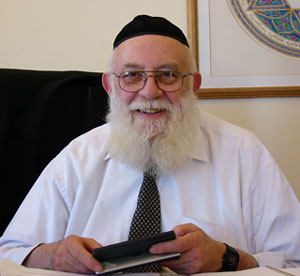 The Jewish world has lost yet another important personality. Reb Noach Weinberg, founder and dean of Aish HaTorah in Jerusalem passed away last week after battling a severe illness.
Known for his pleasant demeanor and strong belief that every Jew has a responsibility to reach out to one another - be they unaffiliated, assimilated, or just going through a rough patch - Rabbi Weinberg served as an inspiration to us all, spearheading the global Kiruv (outreach) movement with his own inimitable way of teaching.
I had the honor of working for one of his sons when I was volunteering at the Zone, back in the Holy Land, and I was able to see first hand the lessons he instilled in his children and students. I met him briefly - too brief to really engage him in any hashkafic discourse, but even in that fleeting moment, I felt the warmth he genuinely exuded.
May his memory indeed be blessed, may the many Ba'alei Teshuva (returnees to Judaism) that he caused to return - be they direct or through students and institutions set up by him - serve as a merit for him, and may he continue to help us up therre, near the Holy Throne...
Subscribe to:
Posts (Atom)

