I've always wondered how people decide that they will wear a mustache. Do they just wake up one day, and decide "you know, I think I'll leave that caterpillar for a while and see where it takes me..."?
Now, I've had a beard in the past. There are things you can do with a beard. You can trim it into a neat little thing, or go Bohemian and let it out (I usually chose the latter option). I had fun with my beard. In class, I would tuck a cigarette or my pen in there (mine got quite nappy after a certain length), and affect a sort of suburban/whiteboy/jewish version of the "pickcomb in the afro" look that our dark skinned brethren have mastered.
But a mustache?
I mean, there isn't too much in the way of style, right? You've got the bushy mustache that sort of mops up any residual food or drink that doesn't make it into your mouth. You've got the Fu Manchu look, but you sort of need a kimono to pull it off. The Hitler 'stash is just wrong...Or, you could go for the "gay frenchman" waxed job. Of course, there's the good old fashioned handlebar mustache, but that takes a lot of time and patience...
I just couldn't figure it out. What would compel someone to make such a decision?
I realized a few weeks ago that the idea isn't spontaneous; it's developed over time by a process similar to osmosis.
I'll explain.
At the beginning of the summer, I went to the barber to get my hair cut. It was after the three weeks, so my beard was pretty healthy then. Since I was home, I had to get rid of it as well. I asked the barber to trim it, in order to make my shaving considerably easy.
The barber did my sideburns, and then my neck and chin. When it came to my mustache, she paused.
"Do you want to keep the mustache?"
Huh? It was so random. I asked her why, and she shrugged. "You would look good with a mustache. You have the right type of growth there."
I took the 'stash off, but that moment stayed with me.
I would look good in the mustache?
My hair was right for it?
I just didn't see it.
Still, a few weeks later, the thought, the idea, was still bouncing around inside my head, floating to the forefront of the murky fishbowl I call my mind.
Gradually, the idea was seeming less alien to me.
After all, there are other folks with mustaches, right?
Some people even looked good in them.
Hell, a mustache is sort of disarming, right? I mean, you can't be scared of a guy with a bushy mustache, can you? It makes one more approachable, in my mind...
And so, last Friday, when I was shaving my several week old beard, I left my mustache. It would be an experiment, of sorts.
I went to Walgreens. The cashier called me "Sir."
Not bad...
I went to Yeshiva. The few guys who saw me snickered and made some comments, but the overall reception was pretty good.
I was almost sold. Maybe I did in fact look good in a mustache.
Sadly, when I was doing a once over with my crummy shaver before Shabbos, I accidentally chopped off half of it, and had to shave the rest.
Bummer....
Thursday, August 30, 2007


Friday, August 24, 2007
An interesting thought...
This past Shabbos, as we were reading the weekly Parsha, I came across something I found to be interesting.
Devarim 18:09 - When you come to the Land that HASHEM your God has given you, do not learn to do like the abominations of these nations.
The narraritive is describing when the Jews will enter the Holy Land, how they will encounter the other nations their, and witness their practices, religious and otherwise. We are warned against learning from these nations, and adopting their actions, and the Torah continues to enumerate the various nations and what they do.
Rashi (the foremost commentary on the Torah) adds in a very important - and in my opinion, revealing - comment:
18:09 - "Do not learn to do" - but you should learn, in order to understand and teach ( a quote from the Sifri ). This means, to understand their deeds, and how they are cursed, and to teach your children "don't do such and such, for those are the ways of the nations."
Isn't that interesting? Rashi is teaching us an important lesson in the fundamentals of parenting: education.
The question, however, is how we go about applying this lesson? What exactly does it mean?
Many would like to say that the best way to raise our children to be God fearing Jews would be complete insulation from the outside world. It's possible that that choice could be the best way, in an ideal situation, where we are able to properly insulate ourselves, i.e. when we are self sufficient, and do not depend on the outside world ( when that is is another discussion entirely).
But what about nowadays? Whether we like it or not, the reality of our situation is that we are in exile. More than that, we are firmly entrenched in a world that is rife with secularism, where gratification of the senses and pursuit of bodily pleasure is King.
Do we, in fact, educate our children in the "ways of the world"? If the answer is yes, then how do we educate? What are the parameters, what are the limits? What is proper and necessary, and what is gratuitous and dangerous?
Any suggestions?
Devarim 18:09 - When you come to the Land that HASHEM your God has given you, do not learn to do like the abominations of these nations.
The narraritive is describing when the Jews will enter the Holy Land, how they will encounter the other nations their, and witness their practices, religious and otherwise. We are warned against learning from these nations, and adopting their actions, and the Torah continues to enumerate the various nations and what they do.
Rashi (the foremost commentary on the Torah) adds in a very important - and in my opinion, revealing - comment:
18:09 - "Do not learn to do" - but you should learn, in order to understand and teach ( a quote from the Sifri ). This means, to understand their deeds, and how they are cursed, and to teach your children "don't do such and such, for those are the ways of the nations."
Isn't that interesting? Rashi is teaching us an important lesson in the fundamentals of parenting: education.
The question, however, is how we go about applying this lesson? What exactly does it mean?
Many would like to say that the best way to raise our children to be God fearing Jews would be complete insulation from the outside world. It's possible that that choice could be the best way, in an ideal situation, where we are able to properly insulate ourselves, i.e. when we are self sufficient, and do not depend on the outside world ( when that is is another discussion entirely).
But what about nowadays? Whether we like it or not, the reality of our situation is that we are in exile. More than that, we are firmly entrenched in a world that is rife with secularism, where gratification of the senses and pursuit of bodily pleasure is King.
Do we, in fact, educate our children in the "ways of the world"? If the answer is yes, then how do we educate? What are the parameters, what are the limits? What is proper and necessary, and what is gratuitous and dangerous?
Any suggestions?
Friday, August 17, 2007
Insomnia
This is a really old one...
The clock shows it's time
emitting a soft glow
I've been lying here for hours
yet the minutes pass so slow
If you stare into the darkness long enough
the blackness will take form
the images flood my imagination
far-flung, away from the norm
Try to think of relaxing things
that will possibly serve to soothe
my blanket is all rumpled;
the sheets no longer smooth
Is it for fear of sleep that I'm awake
afraid to lose myself
sickened by dreams that plague my soul
that disturb my mental health?
Or is it because I might not rouse
once I've succumbed to Morpheus' dust
an eternal sleep, forever unconcious
so awake I stay, I must?
I think over the day's happenings
examining the past events
could it be the discussions so innocent
were really malicious in intent?
Now I finally remember
what I've forgotten in the day
but when I need it, it's already gone
the memories slip away...
Replies that I could have used
only come to me in the black
when I need it, then it eludes me
when useless, it comes right back
My paranoia runs rampant
throughout the restless night
double meanings to every word
compliments only said in spite
Or is it my sins come to haunt me
to remind me of what I've done
tell me in my unrest there's no absolution
my inner battles never won?
Outside it begins to lighten
the world awakens to dawn
another day I must begin
always, I must move on...
The clock shows it's time
emitting a soft glow
I've been lying here for hours
yet the minutes pass so slow
If you stare into the darkness long enough
the blackness will take form
the images flood my imagination
far-flung, away from the norm
Try to think of relaxing things
that will possibly serve to soothe
my blanket is all rumpled;
the sheets no longer smooth
Is it for fear of sleep that I'm awake
afraid to lose myself
sickened by dreams that plague my soul
that disturb my mental health?
Or is it because I might not rouse
once I've succumbed to Morpheus' dust
an eternal sleep, forever unconcious
so awake I stay, I must?
I think over the day's happenings
examining the past events
could it be the discussions so innocent
were really malicious in intent?
Now I finally remember
what I've forgotten in the day
but when I need it, it's already gone
the memories slip away...
Replies that I could have used
only come to me in the black
when I need it, then it eludes me
when useless, it comes right back
My paranoia runs rampant
throughout the restless night
double meanings to every word
compliments only said in spite
Or is it my sins come to haunt me
to remind me of what I've done
tell me in my unrest there's no absolution
my inner battles never won?
Outside it begins to lighten
the world awakens to dawn
another day I must begin
always, I must move on...
Friday, August 10, 2007
Where it all began...

I meant to mention this earlier in the week, but as I wanted the previous post to get decent face time, I let it slide for a few days.
This past Tuesday marked the 20th anniversary of the release of Joe Satriani's debut, Surfing With The Alien.
Joe is an electric guitar virtuoso, known not only for his inpeccable riffs, licks, and hooks, but for the soul which he infuses his works with. He is where it all begain, in my book. He mentored Steve Vai ( who's incredible to the point of possibly surpassing Joe in technique, but lacks any trace of emotion ), and taught Kirk Hammett ( of Metallica fame ) most of what he knows.
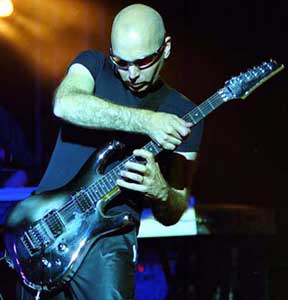
Most of Satch's music is instrumental, and ranges from blistering solos and pure octane to mellow, bluesy tunes.
The debut CD Surfing With The Alien has been rereleased with digital remastering and a whole slew of goodies. And it's worth getting; it has a picture of the Silver Surfer on the album cover!
Here are some faves of mine:
Monday, August 6, 2007
Drawing a line...

Two weeks ago, Noah Feldman wrote an essay for the New York Times' Sunday Magazine. The essay, entitled Orthodox Paradox is his own personal complaint against the system that he feels contributed to his developement, his worldview, and where he is holding today. You see, Feldman went to a Modern Orthodox yeshiva, where the message he recieved was that it was possible to be both a jew and a professional in the non jewish world. However, after embracing the secular world - ultimately marrying a non jewish woman - Feldman now turns to his Alma Mater - which has proceeded to omit the mere mention of him in their alumni newsletters - and cries foul.
My brief summarization can't possibly do the article any justice. Here's the link; I hope it works, and although it's a very long article, it's worth reading.
The reactions varied; many lambasted Feldman, and as an interesting note, it appears that Feldman didn't just piss off folks in the religious community. Allan Nadler of The Forward seriously questions Feldman's sincerity in his choices to remain outside the parameters of Orthodoxy.
Gary Rosenblatt of the Jewish Week was by far the best response.
That was the background.
When I first read the article, I struggled. As one who aspires to work in the Kiruv field professionally - specifically speaking, with jewish teens who reject religious life - I know the importance of not writing off people right away. A lot of times there are misunderstandings, etc. On the other hand, this Feldman fellow blatantly violates numerous Halachic rulings, is aware of it, discusses it in an open, public forum, and has the cajones to blame the system that he came out of, all the while justifying himself with the pithy excuse of "trying his best, in his own, flawed way."
My question - and this wasn't addressed by any articles I have seen - is this. What is the line? What do we consider the point of "no return"? When do we indeed pull up the stakes and pack it in, because there's no more we can do to help this person who is so intent on rejecting the faith? In Kiruv, we deal with kids who are at all sorts of levels of rebellion. Aside from the dangers of desensitizing ourselves to this behaviour, at what point do we move on?
When is it more than an option, but an obligation?
How do we face that moment, and how do we live with that rejection?
Any suggestions? I'm open...
Note: I just found this article, which lends a significant twist on the whole story.
An added point that I forgot to mention was that I was irked at how much attention the Matisyahu "debacle" got from bloggers in light of the fact that the Feldman story happened at basically the same time. I haven't seen any bloggers responding or discussing this very important ( in my opinion ) issue...
Sunday, July 29, 2007
"Fair weather" friends...

Due to my trip last week, I missed a "major" headline...
According to this week's edition of the Jewish Week, Matisyahu is no longer on the Chabad-Lubavitch bandwagon. Naturally, chaos ensues.
Several people, like Chaim, express clear concerns as to where this may be headed, in terms of Matis's spot in the public eye, considering his rise to stardom in so short a time. Chaim is the first to admit that he was a huge fan of Matis, and that he no longer feels comfortable identifying with that status. THat's cool, it's understandable, and it's extremely honest of him.
However, Rabbi Levi Brackman writes a particularily nasty piece on this story on his blog. R. Brackman - whom I've never heard of until today - vilifies Matisyahu, basically equating the fact that Matis may be distancing himself from his point of origin in the religious world with the probability that he may shirk his religious beliefs altogether.
He continues to compare Matis to other "jewish, secular singers" and states that Matis no longer reflects jewish spirituality.
Now, I understand where many folks are coming from, to a degree. A year ago, when Matis suddenly broke ranks with JDub Records, simultaneously breaching his contract and turning his back on the friends who'd gotten him his start, I was very worried. Mainly, I was concerned with how this would be viewed out there in the world. The possibilty of Chillul HaShem when a frum Jew is out there in the spotlight is magnified a hundredfold, at least. I was also, naturally, concerned about Matis's well being, in a spiritual sense.
Was it possible that that was hinting at a deeper problem? Was Matis's rise too fast, and too much all at once? I didn't know, but I'd hoped not. The weight of responsibilty being a frum Jew, coupled with what I'd imagine to be an intense touring schedule, seemed to be a very dangerous thing, indeed.
Thankfully, I believe that the overall Kiddush HaShem outweighed that earlier incident. It made only a marginal splash in the news, and lasted for less than a few days.
Now, I hear yet another "scandal" involving Matis. And I must be honest: I don't see the huge deal.
So, he no longer believes that he identifies with Lubavitch? Okay. So what? I know several people who have become religious through Chabad's help. Without Chabad, who knows where they would be today? But some of them eventually felt that they no longer identified with what Chabad represented or had intended for them, and they left.
They are all still very religious, and some of them may even tell you that they are better for leaving.
Everyone continues to grow. Just because you're moving away from something doesn't necessarily mean that the direction is downward.
We have an expectation of Matisyahu that is unfair, in many respects. He is a baal Teshuva, and a relatively fresh one, at that. And yet ( and I realize that in part, he has brought it on himself, by virtue of the fact that he is representing something larger than he...), we expect him to be saintly, holding him to standards we wouldn't hold of ourselves.
Anonym00kie recently posted about judging people. How we don't realize what is going on in other's lives, and how, if we'd take a moment to relate, to understand, to help, we'd all be in a better place.
Can any of us really relate to Matis? As Rabbi Brackman writes himself: while Matis appeared to be this amazing saint, he was 100% behind him, encouraging kids to listen to him, etc. The moment we get a peek at his ( Matisyahu's) humanity, though, we see that people expect the worst. No one, not even Matis or his managers or agents, ever said he was perfect. I realize that in the spotlight, one has to be so careful, and like I said, I agree. However, I'm growing tired of all these fair weather fans.
I haven't seen Matis get arrested for possesion of drugs. He hasn't been in any tabloids. I pray that he won't, of course, but until something really bad happens, I'm gonna support him.
He's trying to be a warrior, just like the rest of us. Let's give him a chance...
Note: This post was an immediate response after reading Y-Love's post on Jewschool. I quickly read all the posted links, and was very hasty in jumping on Rabbi Brackman's back. After the initial reaction, I went back and read Rabbi B.'s post. His post isn't all that nasty, considering. I still disagree with him, though I apologize if I made him seem like a jerk...
Friday, July 27, 2007
Road Trip...
Hey.
I just got home last night, after a long day of driving. The trip took me about eight hours or so, and was uneventful, thank God.
Oh yeah, there was this one thing, though...
I killed a beaver.
I was driving on the 80 West, and I had just passed the sign that tells you that you're at the highest point on the 80, east of the Mississippi. I was going at about 85 MPH, and I see this black thing in the middle of the road. I tried to swerve, but it darted forward, straight under my jeep.
I think it wanted to die.
I went pulled over and ran back to see what it was I had hit. I had never seen a real beaver before. Technically, I didn't yesterday, either. I only saw half of it...
I just got home last night, after a long day of driving. The trip took me about eight hours or so, and was uneventful, thank God.
Oh yeah, there was this one thing, though...
I killed a beaver.
I was driving on the 80 West, and I had just passed the sign that tells you that you're at the highest point on the 80, east of the Mississippi. I was going at about 85 MPH, and I see this black thing in the middle of the road. I tried to swerve, but it darted forward, straight under my jeep.
I think it wanted to die.
I went pulled over and ran back to see what it was I had hit. I had never seen a real beaver before. Technically, I didn't yesterday, either. I only saw half of it...
Subscribe to:
Posts (Atom)

